Imagine cutting peat for your fire and slicing into the leathery face of a man who died more than 2,000 years ago — his stubble still visible, his expression strangely peaceful, a noose still knotted around his throat. This is not a horror film. It is the everyday reality of the bog bodies, hundreds of astonishingly preserved human corpses pulled from the wetlands of Northern Europe. They are some of the most intimate and unsettling remains in all of archaeology, and they pose a question that has haunted researchers for over a century: why were the bog bodies sacrificed?
The Faces That Refuse to Decay
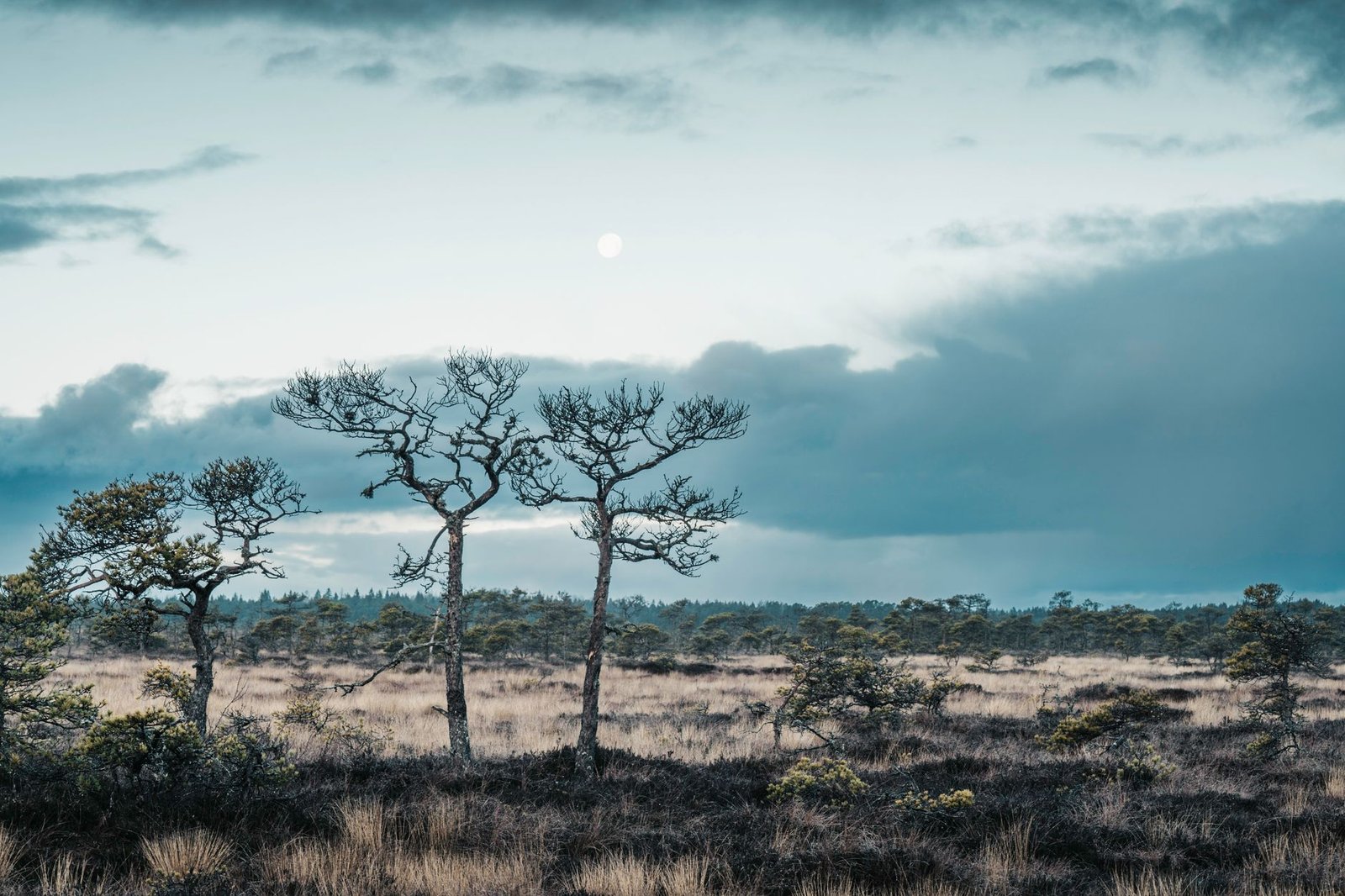
Most ancient bodies survive only as bones. The bog bodies are different. In the cold, acidic, oxygen-starved peat bogs of Denmark, Germany, the Netherlands, Ireland and Britain, the chemistry of decay is switched off. Instead of rotting, soft tissue is effectively tanned like leather. Skin, hair, fingernails, internal organs, even the contents of a person’s last meal can survive for millennia.
The most famous example, the Tollund Man, was discovered in a Danish bog in 1950. His face was so lifelike — eyes gently closed, a slight stubble on his chin — that the men who found him assumed they had stumbled on a recent murder victim and called the police. He had in fact died around 400 BCE. The acidic water that preserves skin also dissolves bone over centuries, which is why some bog bodies feel oddly rubbery and flattened, as if the skeleton inside had melted away.
A Pattern of Violent Death
What turns curiosity into mystery is how these people died. The bog bodies were not victims of accidental drowning or quiet burial. Again and again, forensic examination reveals deliberate, often extreme violence.
Tollund Man was hanged. Grauballe Man, another Danish find, had his throat cut from ear to ear. The Dutch Yde Girl, a teenager, was strangled with a woven band still wrapped three times around her neck. Perhaps the most disturbing is Lindow Man from England, who suffered what scholars call a “triple death”: he was struck on the head, garrotted, and had his throat cut, possibly all within moments. This redundancy of killing — more violence than was needed to end a life — is one of the strongest clues that these were not ordinary executions but ritual killings.
Why Were the Bog Bodies Sacrificed?
So why were the bog bodies sacrificed in such elaborate, brutal ways? The leading theory is that these deaths were religious offerings to the gods of the Iron Age peoples of Northern Europe. To these communities, bogs were not wasteland. They were liminal places — neither solid land nor open water, neither living nor dead — and therefore natural gateways to the spirit world.
Archaeologists have pulled enormous quantities of votive offerings from the same bogs: ornate gold torcs, bronze cauldrons, weapons, jewelry and butchered animals, all deliberately deposited. Placing a human being in that watery threshold may have been the ultimate gift — a sacrifice to ensure good harvests, victory in war, or to appease a hungry deity.
There are competing ideas. The Roman historian Tacitus, writing in the first century CE, claimed that Germanic tribes drowned criminals, deserters and “the unwarlike” in bogs as punishment. Some bog bodies may indeed have been executed wrongdoers or outcasts. Others might have been prisoners of war. The truth is probably that there was no single reason — the bogs received the condemned, the chosen and the offered alike.
Clues Written in a Last Meal
Because the preservation is so complete, the bogs hand us evidence no other site can. Scientists have analyzed the stomach contents of several bodies and found their final meals: a porridge of grains, seeds and weeds, eaten hours before death. Tollund Man’s gut held a gruel of barley and wild plants but no summer fruits, hinting he died in winter or early spring — perhaps tied to a seasonal fertility rite.
Other details deepen the puzzle. Lindow Man had manicured fingernails and a well-kept body, suggesting he was no laborer but possibly someone of status — even a willing or high-value victim. The Yde Girl suffered from a curved spine, and several bog bodies show signs of physical difference or disability, raising the unsettling possibility that the “different” were specifically selected. Like the naturally mummified Tarim Basin mummies, these remains let us study not just how ancient people died, but how they lived, ate and were treated by their communities.
What the Bogs Still Refuse to Tell Us
For all the forensic detail, the central meaning slips away. We can reconstruct a person’s last hours down to the porridge in their stomach, yet we cannot hear the words spoken over them or know whether they walked to their death in terror or in honor. Were these sacred chosen ones, ushered into the next world as messengers? Or were they shamed criminals, denied a proper burial and pinned beneath the peat with stakes so they could not return?
The distribution adds another layer: bog bodies cluster heavily in the Iron Age and then largely stop, as if a particular belief system rose and faded. New discoveries still surface when peat is cut, each one a fresh forensic case from prehistory. Every body refines the picture without ever closing the file, which is exactly why the question of why the bog bodies were sacrificed endures.
Meet the People Behind the Mystery
The bog bodies are more than archaeological curiosities — they are individuals frozen at the worst moment of their lives, staring back at us across two thousand years. Their preserved faces collapse the distance between us and the Iron Age in a way that bones and ruins never can.
We’ve brought their stories to life on the Mysteries of History YouTube channel, where you can see the haunting faces of Tollund Man and Lindow Man, walk through the eerie bogs that swallowed them, and explore the latest forensic findings in full. If these silent witnesses fascinate you, hit play and join us — the full story is waiting on the channel.
Enjoyed this? More videos on the Mysteries of History YouTube channel.