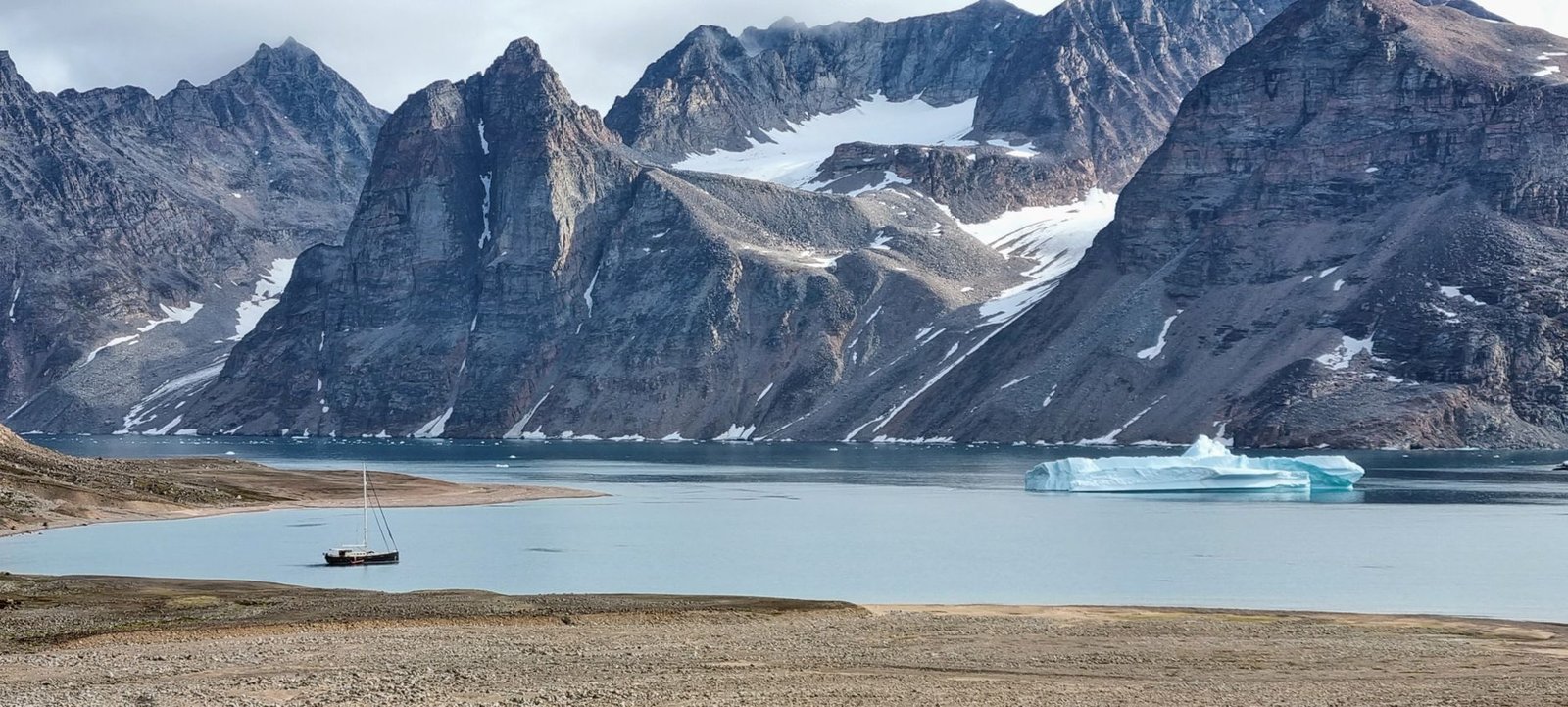
For nearly five centuries, Norse farmers raised sheep, built stone churches, and buried their dead along the icy fjords of Greenland. Then, sometime in the 1400s, they simply vanished. When European ships returned generations later, they found empty houses, scattered bones, and silence. No massacre site, no mass grave, no clear catastrophe — just an entire European colony that quietly ceased to exist. So why did the Vikings abandon Greenland, and where did roughly 5,000 people go? It remains one of the most haunting disappearances in medieval history.
A Norse Colony at the Edge of the World
The story begins around 985 AD, when Erik the Red — exiled from Iceland for manslaughter — sailed west and named the frozen land “Greenland,” reportedly to make it sound more appealing to settlers. His marketing worked. Norse families established two main settlements: the Eastern Settlement near the southern tip, and the smaller Western Settlement further up the coast.
At its height, the colony supported thousands of people, hundreds of farms, a cathedral at Gardar, and even its own bishop appointed from Norway. These were not desperate castaways. They were determined farmers who imported cattle, sheep, and goats, and who maintained ties with the wider Christian world for over 400 years. That longevity makes their eventual collapse all the more puzzling — this was a society that clearly knew how to survive in a brutal landscape, until suddenly it didn’t.
The Little Ice Age Closes In
The most popular explanation is climate. The Norse arrived during the Medieval Warm Period, a stretch of relatively mild centuries that made farming at high latitudes just barely possible. But beginning in the 1300s, temperatures across the North Atlantic began to drop as the Little Ice Age set in.
Growing seasons shortened. Pastures that once fed livestock froze longer each year. Sea ice choked the shipping lanes that connected Greenland to Iceland and Norway, cutting the colony off from vital trade. Ice cores and sediment studies confirm a marked cooling in the region during exactly the period the settlements declined. For a community balanced on the knife-edge of survival, even a few degrees could tip subsistence farming into starvation.
Yet climate alone may not tell the whole story. The Norse had endured cold snaps before, and their neighbors — the Inuit — not only survived the same cooling but thrived through it.
Why the Inuit Survived and the Norse Did Not
Here lies one of the sharpest ironies of the mystery. The Thule people, ancestors of today’s Greenland Inuit, moved into the region during the same centuries the Norse were struggling. They flourished by hunting ringed seals, whales, and fish through the sea ice, wearing skin clothing perfectly suited to the cold, and traveling by kayak and dog sled.
The Norse, by contrast, clung stubbornly to a European way of life. They kept cattle in a land unsuited for it, dressed largely in woven wool rather than insulating furs, and — according to bone evidence — only gradually shifted toward eating seal and marine food. Some archaeologists argue the Norse were culturally unwilling to “go native,” viewing the Inuit as heathen “skraelings” rather than potential teachers. Relations between the two groups appear to have been tense, occasionally violent. A refusal to adapt may have doomed them where flexibility would have saved them.
The Collapse of a Lifeline: Walrus Ivory
Economics may matter as much as weather. The Greenland Norse had one prized export that connected them to Europe: walrus ivory. In an era before elephant ivory flowed freely into the continent, walrus tusks were carved into luxury goods, chess pieces, and religious objects across medieval Christendom. This trade helped pay the colony’s tithes and bought the iron, timber, and grain Greenland could not produce.
Then the market collapsed. As trade routes opened up and elephant ivory became widely available in Europe, demand for Greenland’s walrus tusks crashed. The Black Death, which devastated Norway in the mid-1300s, further shattered the trade networks the colony depended on. With its one economic lifeline severed, Greenland became a forgotten backwater. Ships stopped coming. Isolated, impoverished, and unable to replace worn-out tools or import essentials, the settlement may have simply become unlivable.
Vanished, Not Slaughtered
What makes the ending so eerie is its quietness. Excavations reveal no signs of a great battle or sudden massacre. Instead, the evidence suggests a slow unraveling. In one Western Settlement farmhouse, researchers found the bones of hunting dogs bearing butchery marks — a grim hint that starving families ate their own working animals in a final winter.
Did the survivors slowly die out? Did some sail back to Iceland or Norway in the last functioning ships? Were a few absorbed into Inuit communities? All three may be partly true. There is no dramatic final chapter, only a fading — farms abandoned one by one until the fjords fell silent. Like other lost communities such as the Lost Colony of Roanoke, the Greenland Norse left more questions than answers, disappearing so completely that later visitors doubted they had ever really thrived there at all.
Watch the Full Story Unfold
The fall of Norse Greenland is a chilling reminder that even resourceful, established societies can collapse when climate, economics, and stubbornness collide. It carries echoes of other great vanishings, from the Bronze Age Collapse to civilizations swallowed by shifting environments. The full picture — the archaeology, the ice cores, the last desperate winters — is even more gripping when you can see it. Head over to the Mysteries of History YouTube channel, where we bring these frozen fjords and forgotten farms back to life. Subscribe and join us as we uncover the real story behind why the Vikings abandoned Greenland — and the many mysteries the ice still keeps.
Enjoyed this? More videos on the Mysteries of History YouTube channel.