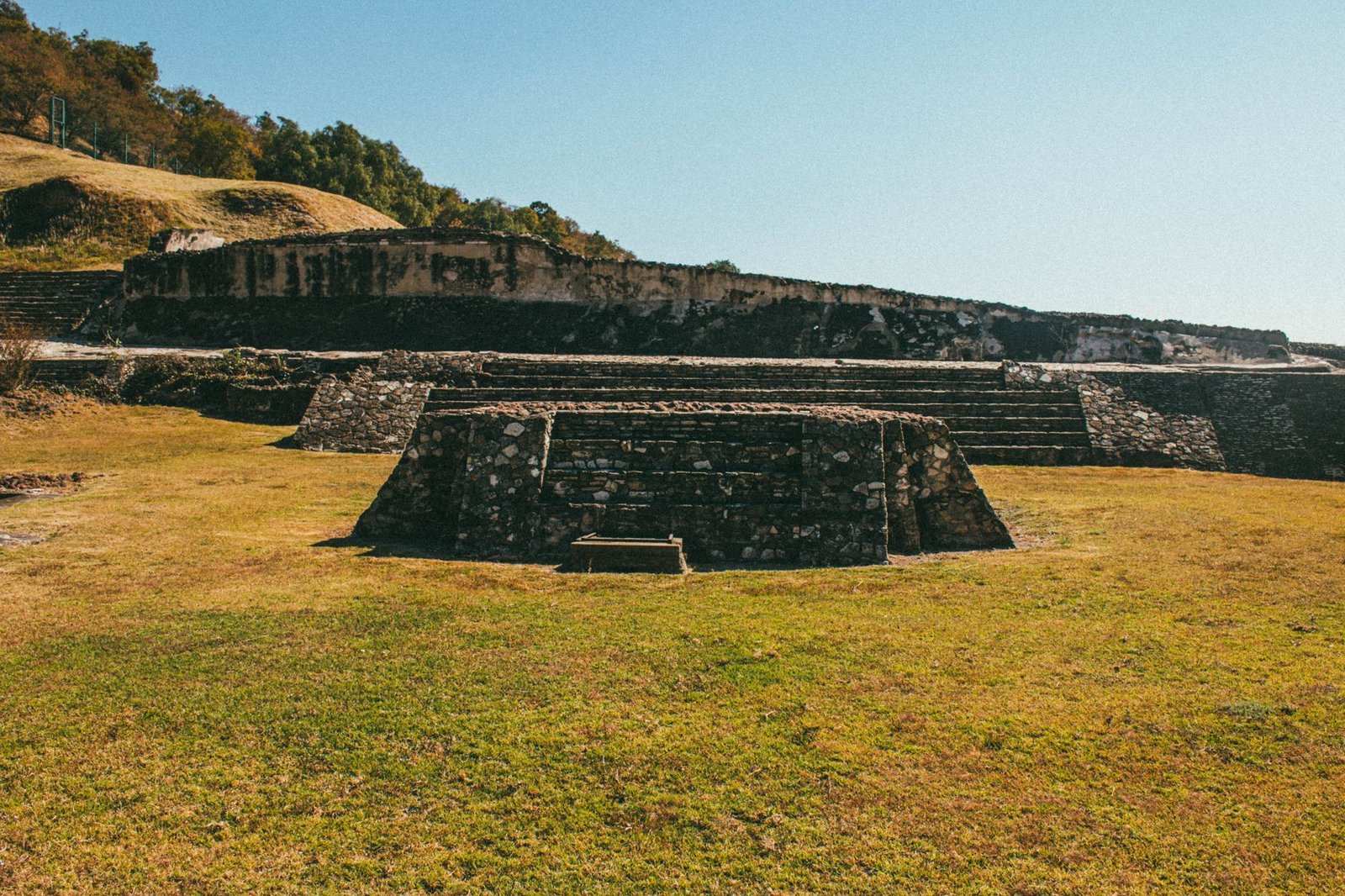
Deep in the grasslands of southern Africa stand the silent walls of a vanished city — mortarless granite blocks stacked more than ten metres high, curving in graceful arcs across the hilltops. When European explorers stumbled upon them in the 19th century, they were awestruck. Then they did something extraordinary: they refused to believe Africans could have built it. The question of who built the Great Zimbabwe ruins became one of the most politically charged mysteries in archaeology — a case where the real puzzle was not the stones, but the lengths people went to explain them away.
The City That Should Not Exist
Great Zimbabwe sprawls across nearly 800 hectares in the hills near modern Masvingo, Zimbabwe. At its peak, between roughly 1100 and 1450 CE, it may have housed 10,000 to 18,000 people, making it one of the largest settlements in sub-Saharan Africa. The name itself comes from the Shona dzimba dza mabwe — “houses of stone.”
The site divides into three zones. The Hill Complex, perched on a boulder-strewn outcrop, was likely a royal and religious centre occupied for centuries. Below it lies the Great Enclosure, an enormous elliptical wall stretching some 250 metres in circumference, containing a mysterious conical tower. Scattered across the valley are the remains of dwellings that once held the wider population.
What stuns visitors most is the craftsmanship. The walls were built without mortar, using millions of precisely shaped granite blocks fitted so tightly that many have stood for over 700 years. No cement, no keystones — just gravity, geometry and skill.
A Trading Powerhouse, Not an Isolated Village
Great Zimbabwe was no remote backwater. It sat at the heart of a vast trade network linking the interior of Africa to the Indian Ocean coast and beyond. Its rulers grew wealthy on gold and cattle, controlling the flow of precious metals mined from the surrounding plateau.
Archaeologists have recovered astonishing evidence of long-distance contact: Chinese Ming dynasty porcelain, glass beads from Persia and the Near East, coins from the Swahili trading port of Kilwa, and Arab ironwork. The famous carved soapstone birds — now a national symbol appearing on Zimbabwe’s flag — hint at a rich ceremonial life.
This was a cosmopolitan capital whose merchants dealt with the wider medieval world. Gold from the Zimbabwe plateau likely flowed through coastal ports and into markets as far away as India and China. Far from being cut off, the city was a plugged-in node in a trading web that spanned oceans.
The Racist Rewriting of History
Here the story turns dark. When German explorer Karl Mauch reached the ruins in 1871, he was convinced they were too sophisticated to be African. He speculated they were built by the biblical Queen of Sheba or Phoenician colonists — anyone, it seemed, but the local Shona people whose ancestors actually built them.
This fantasy hardened into official policy. In the early 20th century, the colonial government of Rhodesia actively suppressed archaeological findings that pointed to African origins. Archaeologists who correctly attributed the site to Africans faced pressure, censorship and dismissal. The very identity of the ruins was weaponised to justify colonial rule: if Africans had never built anything great, the reasoning went, they had no claim to self-governance.
It is one of history’s clearest examples of ideology corrupting scholarship — an entire civilisation erased on paper to fit a political agenda.
What the Evidence Actually Says
The science, however, was never really in doubt among serious researchers. As early as 1905, British archaeologist David Randall-MacIver concluded the site was medieval and African in origin. In the 1920s, Gertrude Caton-Thompson, one of the first women to lead a major excavation, independently confirmed it after meticulous stratigraphic work. Her verdict was unambiguous: Great Zimbabwe was built by the ancestors of the local Bantu-speaking population.
Modern archaeology has only strengthened this. Radiocarbon dating, the style of the pottery, the layout of the dwellings and the continuity of local building traditions all point to the Shona people and their forebears. The city was the capital of a powerful kingdom that later gave rise to successor states like Mutapa and Torwa. There is no mystery about the builders — only a long, ugly refusal to accept the answer.
So when people ask who built the Great Zimbabwe ruins, the honest reply is simple: a sophisticated, home-grown African civilisation did, using local materials, local labour and local genius.
The Real Unanswered Questions
That said, genuine puzzles remain — the kind that make Great Zimbabwe endlessly fascinating rather than merely tragic. Why was the city abandoned around the mid-15th century? Theories point to environmental strain: overgrazing, deforestation and soil exhaustion from supporting a dense population, possibly worsened by shifting climate or the drift of gold-trade routes northward.
Others remain open. What exactly was the purpose of the conical tower inside the Great Enclosure — a granary symbol, a monument to royal authority, or something ceremonial? How was labour organised on such a scale? And what did the soapstone birds truly represent? These are the questions that unite Great Zimbabwe with other enigmatic sites, from the abandonment of Cahokia to the vanished network behind the Bronze Age collapse — great centres that flourished, then fell silent.
Watch the Full Story Unfold
Great Zimbabwe is more than a ruin — it is a monument to human achievement and a warning about how easily history can be distorted. The stones outlasted the empire that built them and the empire that tried to deny them.
We’ve brought this whole saga to life on the Mysteries of History YouTube channel, with stunning footage of the walls, the trade routes and the archaeologists who fought to set the record straight. If you want to see the city that colonizers refused to credit — and understand the civilisation that truly built it — hit play on our full video and subscribe for more lost worlds every week.
Enjoyed this? More videos on the Mysteries of History YouTube channel.