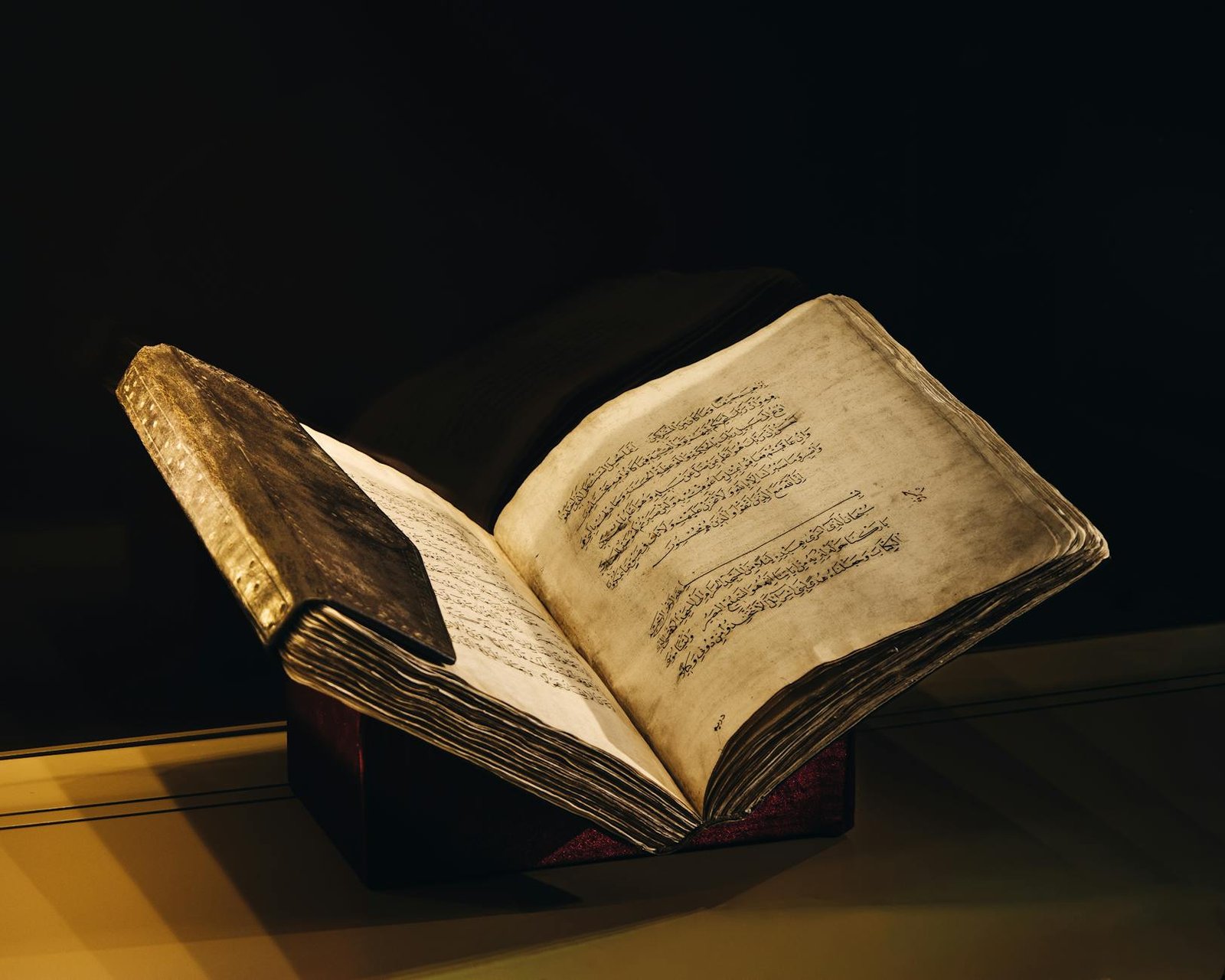
Somewhere in a climate-controlled vault at Yale University’s Beinecke Library sits a small, unassuming book of around 240 vellum pages. It is filled with looping, fluid handwriting that flows like any natural language — and yet not a single word of it can be read. For more than a century, the world’s best cryptographers, linguists, and now artificial intelligence systems have tried to crack the Voynich Manuscript. All of them have failed. This is the story of the most stubborn unsolved text in history, and why nearly everything you’ve heard about “decoding” it is wrong.
A Book That Looks Like It Fell From Another World
The manuscript gets its name from Wilfrid Voynich, a Polish-Lithuanian book dealer who purchased it in 1912 from a Jesuit college near Rome. But the book is far older. Radiocarbon dating carried out in 2009 placed the vellum’s creation between roughly 1404 and 1438, firmly in the early 15th century, and the inks are consistent with that period. This matters enormously: it rules out the long-held suspicion that the book was a modern forgery cooked up to fool collectors.
What makes the Voynich so unsettling is not just the unreadable text but the imagery surrounding it. The pages are crammed with drawings of plants that match no known species, naked figures bathing in interconnected green pools, intricate astronomical and zodiac diagrams, and what look like recipes or pharmaceutical instructions. The book seems to be organized into sections — botanical, astronomical, biological, cosmological, and pharmaceutical — as if it were a complete medieval reference work. Yet every label, every caption, every paragraph is written in a script that exists nowhere else on Earth.
The Script That Behaves Like a Real Language
Here is the detail that keeps serious researchers awake at night: the Voynich text is not random gibberish. Scholars call its writing system “Voynichese,” and it obeys statistical rules that mirror genuine human languages.
When linguists analyze it, they find that the text follows Zipf’s law — the mathematical pattern of word frequencies found in every natural language. Certain “words” recur in predictable places. Some characters appear only at the beginnings of words, others only at the ends, exactly as letters do in real scripts. There appear to be roughly 20 to 30 distinct symbols, a plausible alphabet size. The writing flows confidently, with no signs of hesitation or correction, suggesting the scribe knew exactly what they were writing.
If it were nonsense, it should look like nonsense statistically. It doesn’t. That single fact has prevented the entire field from simply dismissing the book as a hoax — and it’s why the mystery refuses to die.
A Graveyard of Failed Solutions
The list of people who have claimed to “solve” the Voynich Manuscript reads like a who’s who of overconfidence. During World War II, some of the most brilliant American codebreakers — including William Friedman, the man who helped crack Japan’s Purple cipher — took a crack at it in their spare time. They got nowhere. Friedman eventually concluded it might be an early attempt at a constructed artificial language, not a cipher at all.
Since then, the proposed answers have been endless and contradictory. One academic announced it was medieval Hebrew scrambled by anagrams. Another insisted it was a phonetic transcription of an Asian language. A television researcher claimed it was written in a lost dialect of proto-Romance. In 2025, headlines repeatedly trumpeted that AI had finally decoded it — only for specialists to point out that the algorithms were finding patterns without producing any coherent, verifiable translation.
The problem is brutal and simple: a real solution must let you read new passages you haven’t seen before and produce sensible meaning every time. No proposed decipherment has ever cleared that bar. Each “breakthrough” works for a cherry-picked sentence and collapses on the next page.
So What Could It Actually Be?
Strip away the hype and a few genuine possibilities remain. The first is that Voynichese is a cipher — a deliberately encoded version of a known language like Latin. But the text lacks the tell-tale fingerprints most medieval ciphers leave behind, and it would be a fiendishly advanced system for its era.
The second is that it’s a constructed or invented language, perhaps a private system created by a scholar, mystic, or healer. The third — championed by some statisticians — is that it’s an elaborate hoax, possibly generated using a medieval encoding device that could spit out language-like gibberish to dazzle a wealthy buyer. The catch is that producing 240 pages of text this statistically convincing, by hand, with no errors, would itself be a staggering achievement.
A fourth idea suggests the book records a glossolalia or trance language — meaningful to its author in a personal, ritual sense but not encoding standard speech. Each theory explains some features and stumbles on others, which is precisely why the debate never ends.
Why This Mystery Matters More Than the Hype
It’s easy to file the Voynich Manuscript alongside clickbait and “ancient aliens” nonsense, but doing so misses the point. This is a genuine, well-documented artifact, scientifically dated, sitting in a respected library, that has resisted every analytical tool humanity has invented — including the machine-learning systems that crack codes in seconds today.
That resilience is humbling. It reminds us that the medieval world held knowledge, intentions, and ideas we may simply never recover. Like the gears of the Antikythera Mechanism, the Voynich Manuscript proves that the past is far stranger and more sophisticated than our textbooks suggest. The hardest mysteries aren’t always buried under sand or sealed in tombs — sometimes they’re sitting open on a page, daring us to read them.
Watch the Full Story Unfold
The Voynich Manuscript is the kind of mystery that gets richer the deeper you go — the suspicious owners, the wartime codebreakers, the bizarre plants that match nothing in nature, and the AI claims that keep falling apart. On our Mysteries of History YouTube channel, we walk through the manuscript page by page and lay out the leading theories so you can decide for yourself what this impossible book really is. If this article hooked you, the full video will leave you staring at those looping letters long after it ends. Hit play and join the investigation.
Enjoyed this? More videos on the Mysteries of History YouTube channel.