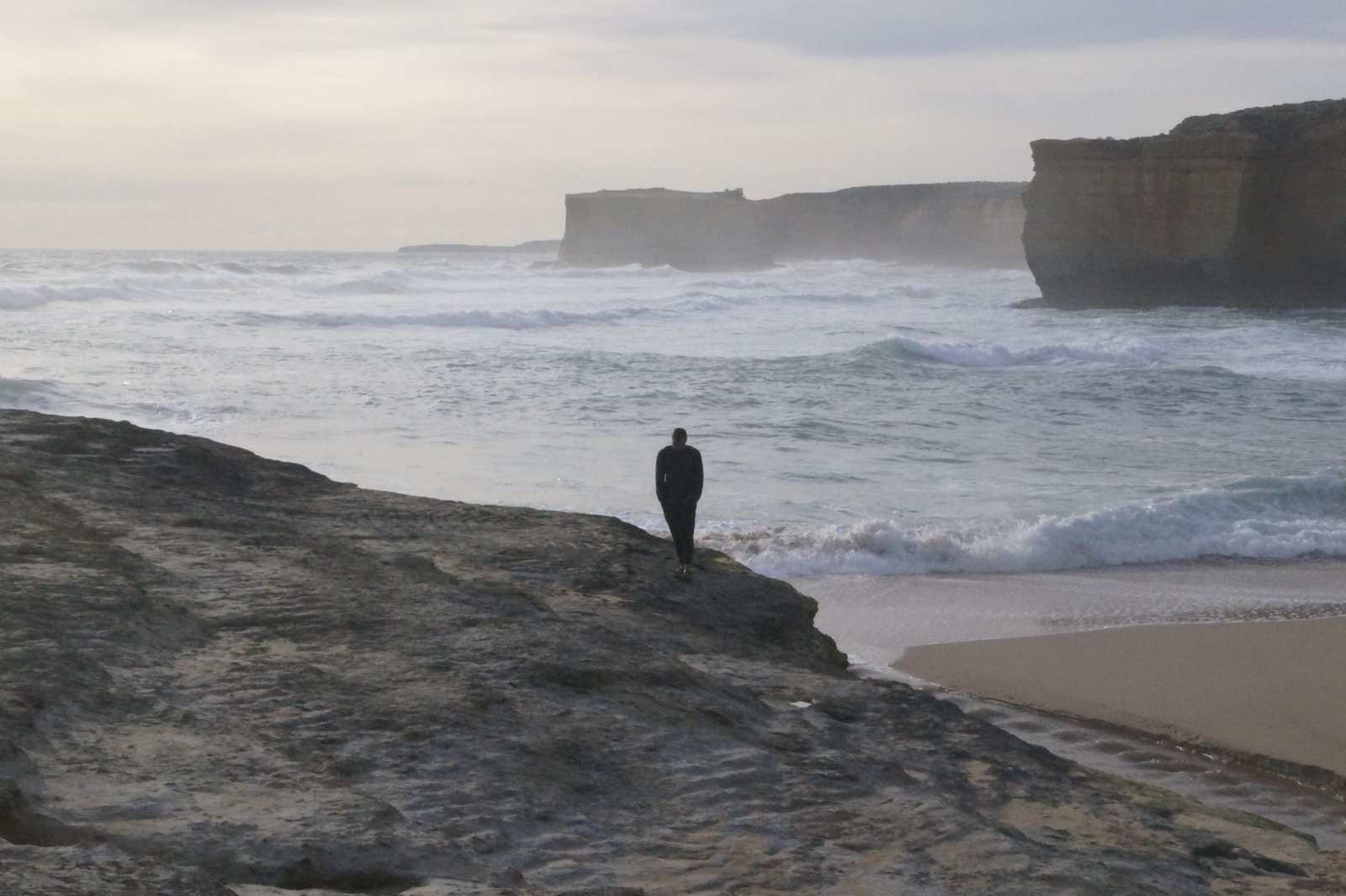
On the morning of 1 December 1948, a well-dressed man was found dead against the seawall at Somerton Park beach, just south of Adelaide, Australia. He had no wallet, no identification, and no obvious cause of death. His face was calm, his shoes were oddly clean, and a half-smoked cigarette rested on his collar. More than 75 years later, we still argue about who he was and how he died. The somerton man tamam shud case has everything a great mystery needs — a hidden code, a mistranslated poem, and a suspicious lack of paperwork — and almost nothing that ties it together neatly.
A body with no name and no cause of death
The first strangeness was the man himself. He appeared to be in his 40s, athletic, with high calf muscles that led some to suggest he had been a dancer or a runner. Every label had been removed from his clothing, a detail that immediately looked deliberate rather than accidental. Autopsy findings were contradictory: his organs showed signs consistent with poisoning — congestion, an enlarged spleen — yet no known poison was ever identified in his system.
The pathologist reportedly believed the man had been poisoned, possibly by a compound that breaks down quickly and leaves no trace, such as a barbiturate or digitalis. But belief is not proof. Without a confirmed toxin and without a suspect, investigators could not even say for certain whether they were dealing with a murder, a suicide, or a natural death dressed up by unlucky circumstances.
The suitcase in the cloakroom
Weeks later, police found an unclaimed suitcase at the Adelaide railway station cloakroom, checked in on 30 November. It almost certainly belonged to him. Inside were more clothes with the labels torn off, a stencilling brush, scissors, and thread that matched repairs on the dead man’s trousers.
But the suitcase deepened the puzzle instead of solving it. A few items carried the name “T. Keane” or “Kean” — yet no missing person by that name could be traced anywhere in the English-speaking world. Was it his real name, a false trail, or the name of a previous owner? To this day nobody knows. Everything about the man seemed designed either to hide his identity or, by sheer coincidence, to make identification impossible.
Tamam Shud: the scrap that named the case
The detail that gave the mystery its name came from a hidden pocket sewn into his trousers. Inside was a tightly rolled scrap of paper printed with two words: “Tamam Shud.” The phrase is Persian, taken from The Rubaiyat of Omar Khayyam, and translates roughly to “it is ended” or “finished” — the final words of that famous collection of poems.
Police launched an appeal, and eventually a man came forward with a rare copy of the Rubaiyat that he said had been thrown into his car parked near Somerton beach. The torn scrap fit exactly into the last page of that book — the missing piece completed the phrase. The find seemed like a breakthrough. Instead, it revealed something even stranger.
The code no one has ever cracked
Inside the back cover of that Rubaiyat, faintly pencilled, was a jumble of capital letters that has never been decoded:
WRGOABABD MLIAOI (crossed out) WTBIMPANETP MLIABOAIAQC ITTMTSAMSTGAB
Codebreakers, amateurs, and even the Australian Navy have studied these lines for decades. Some read them as initial letters of an English sentence — a memory aid or an acrostic. Others suspect a one-time pad cipher, which would be effectively unbreakable without the key. In 2009 and later, academics ran statistical tests and concluded the letters are not random, but consistent with the first letters of words in English. What those words are, nobody can say.
The same book also contained an unlisted telephone number that led to a young nurse living nearby, who reportedly reacted with visible shock when shown a plaster cast of the dead man’s face — yet always denied knowing him. That reaction, combined with the Cold War timing and the removed labels, is why the somerton man tamam shud case is so often linked to theories of espionage and a possible spy who died with his cover intact.
A DNA answer — but not the ending
In 2022, University of Adelaide professor Derek Abbott, working with an American genetic genealogist, announced that DNA extracted from hairs preserved in the plaster death mask pointed to a name: Carl “Charles” Webb, an electrical engineer and instrument maker born in Melbourne around 1905. The identification was built through genealogical databases and family trees, and it is a remarkable feat of persistence.
But it is not the tidy conclusion many hoped for. As of now the finding has not been formally confirmed by South Australian authorities, and even if the name holds, the deep questions remain. Why were his labels removed? How did he die, and by what poison? What does the code mean, and why did he carry “it is ended” sewn into a secret pocket? A name is not a solution. If anything, it hands us a man and asks us to explain everything he did in his final days.
Watch the full investigation on Dark CasesTV
The Somerton Man sits alongside the greatest unsolved puzzles in criminal history — cases where physical evidence exists but refuses to speak, much like the unsolved Zodiac ciphers or the questions that still haunt the Black Dahlia case. If you want the full timeline — the beach, the suitcase, the poem, the code, and the DNA breakthrough — laid out with the detail it deserves, watch our complete deep-dive on the Dark CasesTV YouTube channel, where we trace every clue and weigh every theory. Subscribe and decide for yourself: is the case finally ended, or just beginning?
Enjoyed this? More videos on the Dark CasesTV YouTube channel.