For roughly four centuries, the eastern Mediterranean ran on something that looked startlingly modern: a web of trade, diplomacy and luxury goods that stretched from the palaces of Greece to the courts of Egypt. Kings wrote letters to one another, addressing each other as “brother.” Then, within the span of about two generations, almost all of it was gone. Cities burned, writing systems were forgotten, and entire civilizations simply stopped. What happened around 1200 BC is one of history’s most dramatic and least-understood catastrophes — and the truth is far stranger than the usual story about mysterious raiders.
A Connected World Most People Never Learned About
Before the collapse, the Late Bronze Age was arguably humanity’s first experiment in globalization. The great powers of the era — the Egyptians, the Hittites of Anatolia, the Mycenaeans of Greece, the kingdom of Mitanni, the Babylonians, the Assyrians, and the wealthy trading cities of the Levant like Ugarit — were locked together in a dense network of exchange.
This was not casual barter. Tin from as far away as Afghanistan and Central Asia traveled thousands of miles to be alloyed with copper from Cyprus to make bronze, the strategic metal that defined the age. A famous shipwreck found off the Turkish coast at Uluburun, dated to the late 14th century BC, carried ten tons of copper, glass ingots, ebony, ivory, and goods from at least seven different cultures — a single cargo that proves how interdependent these societies had become.
That interdependence was their strength. It was also, as it turned out, their fatal weakness.
The Sea Peoples and the Story We Inherited
The popular version of the collapse usually centers on a shadowy enemy known as the Sea Peoples. The phrase comes largely from Egyptian inscriptions, especially those of Pharaoh Ramesses III at his mortuary temple of Medinet Habu, which describe a great confederation of foreigners sweeping in from the sea and overland around 1177 BC.
One inscription famously claims that “no land could stand before their arms,” listing fallen powers as the invaders advanced. The text names groups such as the Peleset, Sherden, and Shekelesh — peoples whose exact origins are still debated. To the Egyptians, this was an existential war, and Ramesses III claimed to have defeated them in a massive land and sea battle in the Nile Delta.
For a long time, historians treated the Sea Peoples as the single cause: a tidal wave of marauders who toppled the Bronze Age like dominoes. But the more archaeologists dig, the more this clean narrative falls apart. Who were these people, and why were they on the move in the first place? Increasingly, scholars suspect the Sea Peoples were not just the cause of the crisis — they were also its victims, refugees displaced by a disaster already underway.
A Perfect Storm, Not a Single Enemy
The modern view is that the Bronze Age didn’t fall to one blow. It suffered a systems collapse — a cascade of overlapping disasters that no single kingdom could absorb.
The evidence points to a brutal combination. Climate scientists have found signs of a prolonged drought across the eastern Mediterranean lasting decades, recorded in pollen samples from places like the Sea of Galilee. Crops failed, and grain shortages appear in the historical record: letters from the Hittite king beg for emergency shipments of food.
Layered on top of this came earthquakes — geologists describe an “earthquake storm,” a series of seismic events that battered the region. Add famine, internal rebellion against palace elites, the disruption of trade routes, and the movement of desperate populations, and you have a self-reinforcing spiral. Cut the tin supply, and you can’t make weapons. Break the trade network, and the palaces that controlled it lose their reason to exist.
The last king of Ugarit left a chilling clay tablet, apparently never sent, reporting that enemy ships had set his cities ablaze while his own forces were away. The tablet was found in the burned ruins of the city itself.
What the Ruins Actually Tell Us
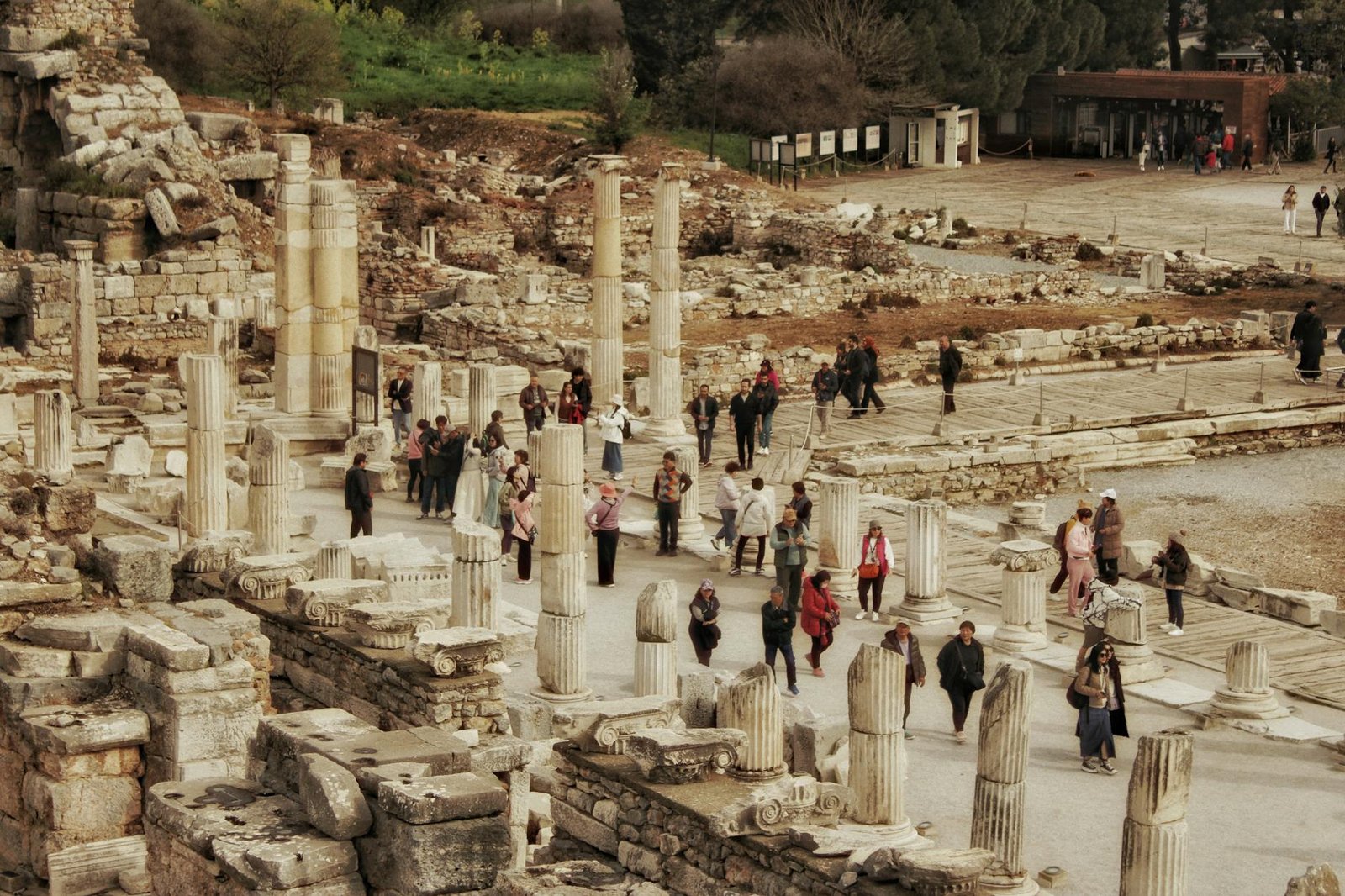
The destruction layers are real and dramatic. The Hittite capital of Hattusa was abandoned and burned. Mycenaean palace centers like Pylos and Mycenae were destroyed, and the sophisticated Linear B writing system — used mainly for palace accounting — vanished entirely. Greece entered a centuries-long “Dark Age” so deep that the later Greeks forgot how to write and remembered this lost world only through myth, in the heroic age of the Trojan War.
Not everything died. Egypt survived, though weakened and never again the superpower it had been. New peoples and smaller states emerged from the wreckage. Crucially, the scarcity of bronze may have pushed innovation toward a more available metal — iron — helping usher in the Iron Age. Like the technological marvels explored in the Antikythera Mechanism, the Bronze Age reminds us that ancient sophistication could be both astonishing and fragile.
Why This 3,000-Year-Old Crisis Still Haunts Us
The Bronze Age collapse fascinates modern researchers for an uncomfortable reason: it looks like a warning. A wealthy, interconnected world, dependent on long supply chains and stressed by climate change, unraveled with terrifying speed once several pressures hit at once. The very connections that made these kingdoms rich made them vulnerable to a chain reaction.
That is what separates this mystery from a simple invasion story. There was no single villain — only a fragile system that crossed a tipping point. And historians still argue fiercely about which factor mattered most.
Watch the Full Story Unfold
The fall of the Bronze Age is a story of burning palaces, desperate letters, vanished scripts and a civilization that forgot how to write — told through the very tablets and ruins the survivors left behind. On the Mysteries of History YouTube channel, we bring this lost world back to life with maps, timelines and the latest archaeological evidence, so you can see exactly how the first global age came crashing down. Hit play, and discover how close the ancient world came to total darkness.
Enjoyed this? More videos on the Mysteries of History YouTube channel.